Letter to the Editor

2. See the article from the Pioneer Press linked here: Pioneer Press opinion piece: https://www.twincities.com/2018/04/29/kids-today-have-no-idea-what-car-is/ (Links to an external site.)Links to an external site. Kids have no idea what a car is by Joe Soucheray. Read the article and respond as though you were writing a letter to the editor of the Pioneer Press. Do you agree or disagree with the writer? 

To the Editor,

I have recently read your opinion article, “Kids these days don’t know anything about anything” published in the Pioneer Press. There are many things that could be said about this article, but I will start off by saying that I found it an overall very irritating read. Your rant about cars and cell phones is completely irrational and silly.

First off, you write about the “modern kid” not knowing about things such as wrist watches, newspapers, AM radio, rotary dial telephones, and automobiles. I think you are over exaggerating by claiming that the “modern kid” does not know about these objects at all, but you may be right by saying they do not know a lot about them. Even if younger generations are not the most familiar with AM radio and rotary dial telephones I do not think that is something to be too concerned with, it is actually very insignificant.

However, the majority of your article seems to be focused on automobiles. You are concerned with the “modern kid” not knowing the difference between sedans, trucks, and SUVS. I cannot help but think, “Who cares if children do not know the difference between different car types?” but you clearly do. Although it is your right to be disappointed with societies decreasing admiration for cars it is not accurate to say it is due to cell phones and social media. It is true that car sales in the United States are declining, expecting to fall to 16.8 million in 2019 from 17.3 million in 2018, but this decline could be attributed to economic reasons such as the expenses related to marriage, childbearing, and homeownership. Younger generations are waiting to purchase brand new cars because of the expenses so it only makes sense that young children are not going to be familiar with everything related to cars.

The thing I find most insulting in your article is how much you underestimate the “modern kid.” You describe them in a way that makes them seem like they are unintelligent which could not be further from the truth. Today, children and adolescents are definitely at an advantage when it comes to access of information with the creation of the Internet but this has allowed them to be smarter than past generations. It is amazing how easily younger generations are able to navigate and use new technologies compared to older generations. New applications have changed the way children can learn in schools and enhances their learning by allowing them to collaborate with their peers.

I am not saying that there are no negative effects of cell phone and social media use on younger generations, but when they are used appropriately they can be great tools. New technologies has provided children access to educational applications for learning, applications for play, and platforms that allows them to express their identity. Cell phones, laptops, and social media are not bad things. It is when they are used in ways that are harmful and inappropriately that negative impacts occur. It is when parents, caregivers, and teachers do not model appropriate use of technology that teaches children and adolescents how to use technology.

Today, it is so easy to blame everything that is wrong in the world on cell phones, social media, and video games. Some of the blame may be justified but correlation does not equal causation. New technologies are just one factor affecting children’s outcomes. You end your article with, “Do you think kids are better off than kids of a generation or two ago?” (Soucheray, 2018) and I cannot easily say yes or no to this question. But I can unquestionably say that the answer to your question cannot be solely attributed to technology. The younger generation may or may not be better off than past generations but there are a multitude of reasons influencing why.

If children’s knowledge and fascination with cars is the most important of your concerns in the world today than I suggest you reevaluate things.

Sincerely,

Tiffany Ramirez

References

Agrawal, A. (2017, June 21). How Technology Has Made Our Kids Smarter Than Ever. Retrieved from https://www.huffpost.com/entry/how-technology-has-made-o_b_10577380

Coppola, G., Naughton, K., & Bloomberg. (2019, March 1). U.S. Auto Sales Hit Massive Speed Bump. Yes, Even Jeep Wrangler Sales Declined. Fortune. Retrieved from http://fortune.com/2019/03/01/auto-car-sales-decline-jeep-ford-toyota-honda-nissan/

Knorr, C. (2017, May 15). Be a Role Model: Find a Healthy Balance with Media and Technology. Retrieved from https://www.commonsensemedia.org/blog/be-a-role-model-find-a-healthy-balance-with-media-and-technology

Soucheray, J. (2018, April 29). Kids these days don’t know anything about anything. Pioneer Press. Retrieved from https://www.twincities.com/2018/04/29/kids-today-have-no-idea-what-car-is/

Families and Financial Literacy

As noted above, explore games and apps to teach children about money. Check out the link above with “10 Interactive financial websites that teach kids money management skills.” Offer your thoughts about one or more of the games or apps as a way for children to learn about money. If you were a parent would you select one or more of these for your child? Or does it depend on the age. What is your assessment of the game or app? 


I started working part time jobs during the summer when I was 15 years old and when I got older I began to work part time during the school year. In my 4 years of high school I probably have worked at 7 different jobs, not always at the same time but sometimes at the same time. I enjoyed working at a young age because having my own money was nice and I could spend it on whatever I wanted. However, when I look at my savings account today you would not think I had worked a job since I was 15 years old because I have no money to show for it. If there was one thing I could go back and change it would be how I spent and managed my money.

What I have learned from my own personal experience is that children and adolescents need to be taught about financial literacy and money management skills. It seems that many parents are not teaching their children about this and children are not being taught this in schools. In one study, it was reported that only 16.4% of U.S high school students are required to take a personal finance course. This a significantly low number of students receiving information on financial literacy. But sometimes talking about these topics can be difficult because talk about money is often thought of as taboo. In Smith (2019), Kelly Anne Smith discusses the necessity for parents and teachers to be teaching children and adolescents about money management skills and financial literacy. She mentions how the approach to teaching this subject is easier than ever before with the creation of technology. Technology has made it easier than ever before to teach children financial concepts at young ages.

When looking at the list created by Writtenhouse (2016) I found that some of the websites that help teach children about money management skills were better than others. One of the first websites I checked out was Financial Football. There were many things I found interesting about this website. The first thing I was surprised about are the companies that created this game are the National Football League (NFL) and Visa. I think it is a good thing that  these two big companies teamed up together to create this game. The game had versions for 3 different age ranges and different game lengths. I decided to play the 5 minute version of the game for 18 year olds and older. The game is an interactive football game between two NFL teams and the player has two answer questions related to financial literacy to make a play in the game. My overall assessment of this game is that I think it is a good resource for teaching children about financial literacy. I think this website would be more attractive to boys than girls because of the NFL component of the website but anyone can learn something from playing this game. I could see teachers having this as an activity that children can play in the classroom individual or as a class. Another website I checked out was The Mint, a website that had lessons on financial literacy for kids, teenagers, parents, teachers, and emerging adults. What I liked about this website is that it has games for teenagers and kids to play in order to learn and it has pages of information on saving, spending, and earning money. This would be a great website for parents to read to learn about how to talk to their children about financial literacy and for teachers to teach their students. This is a good website because it had resources for everyone and age-related information because saving money can be different for teenagers than it is for college graduates.

From looking at websites that teach children and adolescents about financial literacy and money management skills I understand how technology can have an effective role in doing this and be useful. In lecture we discussed how money and money management can be a huge stressor on families but by using these websites and applications is can be less stressful. Children can begin to learn how to be smart with their money at a young age which will pay off in the long run.

References

Smith, K. A. (2019, April 7). Why parents should start teaching their kids about money at an early age. Retrieved April 13, 2019, from https://www.bankrate.com/personal-finance/parents-teach-kids-about-money-early-age/

Writtenhouse, S. (2016, January 2). 10 Interactive Financial Websites That Teach Kids Money Management Skills. Retrieved April 13, 2019, from https://www.makeuseof.com/tag/10-interactive-financial-websites-teach-kids-money-management-skills/


Parenting with Technology

What are your thoughts & feelings about your future roles as parents or as caregivers and what your technology use might mean?

Since the beginning of Spring semester I have been thinking more about the impacts and influences of technology on my life than I have ever done before. This is certainly due to this course but also due to the couple of child psychology courses I have taken and currently taking. All of the information I have learned so far from these courses have caused me to think about my future role as a parent and the role technology will play. When I think of my future role as a parent and my technology use, I think of how mindful I want to be when it comes the impact my use of technology will have on my parenting.

As discussed recently in class, parents are the first role models children are exposed to. You do not need to be a parent to know that children learn from and model the actions and behavior of older individuals. If parents know that their children are watching and learning from them then why are they not more mindful of their technology use?

In a JSTOR Daily article published in 2017, Alexandra Samuel offers her insight on the often argued belief that smartphones have multiple negative effects on children today. She examines an article that argues smartphones are harming social interactions between youth and their mental health, and causing them to be less independent. But Samuel points out that the data used to form these conclusions does not actually support them. She then examines the increase in social media and technology use that often concerns parents. Data shows that children and teenagers are not the only ones increasing their use of technology and social media, adults are too. Samuel argues that children are becoming more disengaged because they see their parents and the adults in their life disengaged as well. She suggests that parents need to have the role as digital mentors, where they encourage their children to use technology but offer support and guidance on how to use it appropriately. When I think of myself as a parent, this is the approach I want to have when it comes to technology use. Parents need to recognize they are partly responsible for their children’s use of technology because they are not actively involved in monitoring and guiding their use. I also like this perspective because it does not mean parents should try to completely control their children’s use of technology, that would not be realistic.

While many parents and caregivers are recognizing better ways to approach their children’s technology use today, there are still parents that are more rigid in their approach. In a USA Today article, 3 mothers were interviewed about how they address their children’s social media use. When I first read this article and watched their interviewed I was a little shocked about how these mothers reacted to their children’s technology use. It seemed like the way they were approaching technology use was not in a digital mentor approach. One of the three mothers talked about how she uses an app that allows her to monitor her children’s phones. The app allowed her to monitor and manage her children’s activity on their social media accounts, see their locations, block their texting, and even lock their phone screens to manage screen time. I thought that the mother using an app to monitor and manage her children’s devices and social media accounts was extreme, her children had no privacy. This reminded me of the parenting styles discussed in lecture, authoritative, authoritarian, permissive, and uninvolved. An authoritative parent is high in demand, very controlling, and parent-centered. I cannot assume that the mother that uses this app has an authoritarian parenting style based on this alone but I can assume she has an authoritarian approach to her children’s technology use. I also wonder about the children feel about their mother using an app to manage their technology use. It might cause them to feel like there is no privacy in their lives or that their mother does not trust them. This could have possible outcomes in the future.

It is interesting to see how parents and caregivers are dealing with technology use in their children as they grow up. Some parents are more concerned with monitoring and managing their children’s use while some parents may understand that not all technology use is negative. I think by understanding my own use of technology, in the future as a parent I will know how to appropriately approach my child’s use of technology.

References

Graham, J., & Maltais, M. (2018, December 18). Parents talk tech: How many likes would you give raising kids in the age of social media? USA TODAY. Retrieved from https://www.usatoday.com/story/tech/talkingtech/2018/12/19/challenges-raising-kids-age-social-media/2350534002/

Samuel, A. (2017, August 8). Yes, Smartphones Are Destroying a Generation, But Not of Kids. JSTOR Daily. Retrieved from https://daily.jstor.org/yes-smartphones-are-destroying-a-generation-but-not-of-kids/?utm_medium=Email&utm_source=ExactTarget&utm_campaign=20170813Mindshift&mc_key=00Qi000001X2OYEEA3

The Power of Creators

For your blog post identify an area that you are most interested in, and identify a couple sources of research about that and present in your post what the research literature (even just 2 studies) says about this.

When the Super Bowl came to Minneaoplis last year, one of the many celebrities seen exploring the city was YouTuber, David Dobrik. At the time I had no idea who he was but almost everyone I knew seemed to be big fans of his. I eventually looked him up after I heard he created a “vlog” of his time in Minneapolis which included him going to a frat party on campus. After I discovered David Dobrik’s YouTube channel I found myself spending hours watching many other YouTubers videos. Now, I can say I understand the obsession with YouTube that many people have. YouTube serves many purposes as a video-sharing website, such as streaming movies, tv shows, and music videos. However, I am curious of the effect “creators” may be having on teenagers behavior and mood. With the rise in popularity of many YouTubers, it seems necessary to see how individuals between 12 and 18 years old are being influenced by them.

In a 2016 Google report, the influence of YouTubers on millennials and teenagers was surveyed. One impact concluded from the survey was the relatability teenagers felt with YouTubers, reporting that 70% of teenage subscribers felt they relate to creators more than traditional celebrities. Another statistic from the report shows that 4 in 10 subscribers feel that their favorite creator understand them better than their friends. I think that these two statistics from the report are very interesting because they how strongly teenagers feel about creators. They seem to them as people they can relate to and people that understand them. The statistic about teenagers feeling more understood by creators than their friends is a bit shocking to me because it shows the way teenagers may deal with socialization problems. If the are feeling misunderstood by the people they know they may turn to YouTubers. This survey shows that the growing creator community is having a real impact on teenagers.  

In a study from Westenberg (2016), Westenberg examines the influence YouTube has on teenagers behavior. After surveying and interviewing a group of teenagers, it was concluded that YouTubers have an overall positive influence on teenagers. Teenagers expressed that they learn practical tips and tricks, get inspired on clothing and that creators have an overall positive influence on their mood and wellbeing. I think the statements from the surveyed teenagers shows the good influence creators have on teenagers behavioral development. The platform creators have allows them to influence the daily lives of teenagers from impacting their mood and even the clothes they purchase and wear. The study also looks at how many parents are unaware of this community that means a lot in their teenager’s life.

With all of the possible positive influences YouTube creators have on many of their teenage viewers lives, there is still the possibility for negative influences. One specific concern is the concern for YouTube creators, specifically women, whose content is focused on fashion and beauty. Many have voiced concern about creators whose videos are centered on makeup, clothes, and looks because of the impression it could leave on young girls. I think this is a fair concern for people to have because there is already tons of pressure put on girls and women in this world to look a certain way. Their content could influence adolescent girls to be more focused on their looks and what they wear. The amount of subscribers many of these YouTubers have can run into the millions which means their content can reach a wide range of people so it is crucial that they are conscientious of what they say and do.

When I decided to write about the impacts an application such as YouTube may have on the development in teenagers, I did not realize how difficult it would be to find research. What drew me to this perspective was the rise in YouTube viewing I have personally seen in the last year. I have two young nieces in elementary school that are growing up in this generation where technology is everything to them. One of my nieces had begun to upload ‘vlogs’ with her friends on her YouTube channel. I also work with school aged kids who talk a lot about their love for YouTube and certain YouTubers. From the research I could find, I take from it that YouTube creators are becoming more influential role models for children and adolescents to look up to than traditional celebrities. The research is showing that they are having an overall positive impact in individual’s lives, they increase the well-being and mood in individuals which affects their behavior and actions. However, I definitely think there needs to be more research on this perspective because the popularity in YouTube and creators is only going to increase so parents and caregivers should understand the impact of it.

References

Conversation, T. (2017, May 26). Beauty, fashion, looking ‘hot’: The messages Youtube is sending to girls. Retrieved from https://www.mamamia.com.au/how-bloggers-influence-teenagers/

O’Neil-Hart, C., & Blumenstein, H. (2016, July). Why YouTube Stars Are More Influential Than Traditional Celebrities. Retrieved from https://www.thinkwithgoogle.com/consumer-insights/youtube-stars-influence/

Westenberg, W. (2016). The Influence of YouTubers on teenagers (Unpublished master’s thesis). University of Twente.

What is the future of the Internet?

Read the assigned reading (pp. 1-22 of it) on our “Digital Life in 2025 and the hopeful and less hopeful predictions offered by experts. Select 3 of the predictions. What do they mean to your personal life, family life and work life?

The report from Anderson, J. and Rainie, L (2014) was an interesting report to read. Everyone is always so curious of what the future will look like, especially the future of technology and internet. These predictions offered by experts will make anyone wonder how the future of technology and the internet will affect their lives. Looking specifically at three of the predictions, I wonder how my personal life, family life, and work life will be impacted.

3) The Internet of Things, artificial intelligence, and big data will make people more aware of their world and their own behavior. 

This is one of the more hopeful predictions from the experts. I think this prediction could be interpreted in two ways. The first way is that it means people will be more conscientious of what they put on the internet and their actions on the internet. The second way is that it means people will have more information of their behavior on the internet and the activities they engage in. This would impact my personal life and others in the future in the way people would be more aware of their actions online because their actions would be permanent regardless if something is deleted or taken back. Or it would be impactful in the way people will have information on how they are spending their time on the Internet. Today we are just beginning to have information on how much time we spend on our phones and what sites or apps we are spending our time on so this would be more advanced in the future. It will definitely make people think about how they are spending time and what means the most to them. For example, my iPhone shows that I spend the most time on Instagram which makes me think about how well I am managing my time.

9) Dangerous divides between the haves and have-nots may expand, resulting in resentment and possible violence.

This is one of the less hopeful predictions from the experts. This prediction is clear in what it means, inequality between people will increase causing hostility and violence. I do not personally believe in this prediction but if possible I can see the affects. I think being more aware of people’s lives, social class, and status could affect how people feel about themselves. Personally, when I see people flaunt their wealth and luxuries on social media I do feel a little bit jealous. How can you not be jealous of someone who is able to travel the world multiple times in a year? Overall in the future as inequality between social classes increases, the opportunity to express your anger and distress could cause hostility.

14) Most people are not yet noticing the profound changes today’s communications networks are already bringing about; these networks will be even more disruptive in the future.

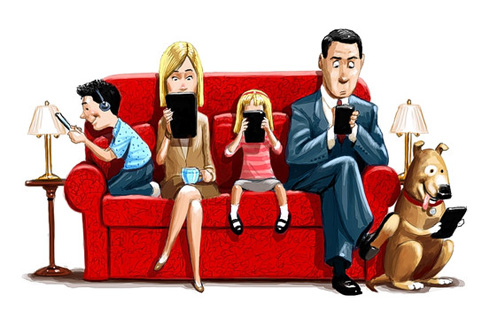
This is another less hopeful prediction from the experts. This prediction states that communication networks will continue to impact the everyday lives of people in the future. Today, we are beginning to understand the impact social media, email, blogs and more have on our lives. In the future, these networks could be more disruptive to our lives. The impact communication systems have on families already exists. It is less face-to-face interaction, less communication, more isolation. In the future it would only get worse, families would feel less close with each other. Communications networks would continue to allow people to present themselves in whatever way they like, whether it is reality or not. The accessibility of communications networks in the future would allow people to have their whole lives on their device. People will always have their job with them even if they are not physically at work. There will be no separation between personal lives and work because they will blend with each other.

Another article I found on predictions of the Internet in the future predicts something that seems unbelievable. This is the idea that Earth won’t be the only planet with Internet access. The article states by 2030, Mars will have Internet access and people will have settled there. Although this may seem unimaginable it is possible to see in the future. If there is Internet access on Mars in a couple of decades then that would affect all people on Earth. Families would be able to communicate with their family and friends who may have settled there.

These predictions are interesting to look at, especially from people who are very knowledgeable in technology and the Internet. As technology and the Internet continue to change and advance will we see the effects it has on people.

Anderson, J. and Rainie, L. (2014). Digital Life in 2025. Pew Internet and American Life. http://www.pewinternet.org/2014/03/11/digital-life-in-2025/

DeMers. (2018). 7 Predictions For How The Internet Will Change Over The Next 15 Years. Forbes. Retrieved from https://www.forbes.com/sites/jaysondemers/2016/04/18/7-predictions-for-how-the-internet-will-change-over-the-next-15-years/#49b5f7522e0e


Design a site like this with WordPress.com
Get started